

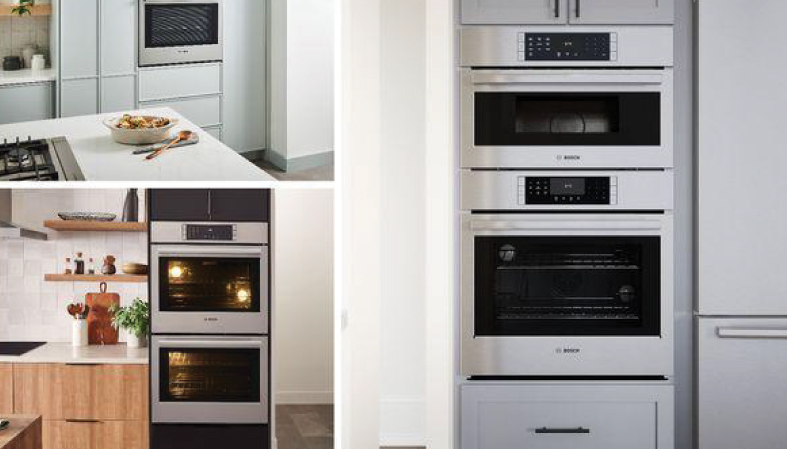
Choosing the appropriate oven is crucial for attaining culinary mastery in any kitchen. To make an informed decision, it is crucial to have a full awareness of kinds, installation options, fuel choices, and major characteristics. This tutorial will explore the several elements to consider when buying an oven, helping you select the ideal appliance to meet your culinary needs.
Understanding Different Types of Ovens
Conventional Ovens
Traditional ovens commonly employ a heating element positioned beneath the baking space for baking purposes, and another element positioned above for broiling. Although ordinary ovens are adequate for simple culinary activities, they may not consistently distribute heat evenly, which can result in variable cooking outcomes.
Convection Ovens
Convection ovens contain a fan that moves warm air throughout the cooking chamber, guaranteeing even heat distribution for baking and roasting. These ovens are optimal for attaining uniform cooking outcomes while simultaneously conserving time and energy in comparison to traditional ovens.
Microwave Ovens
Microwave ovens are renowned for their capacity to use microwaves for cooking, rendering them favored options for rapidly reheating and defrosting food. Nevertheless, their distinct heating technique renders them unsuitable for conventional baking endeavors.
Steam Ovens
Steam ovens employ the use of steam to cook food, thereby retaining a significant portion of its nutrients and flavors. This delicate cooking technique is perfect for folks who are health-conscious and prioritize preserving the nutritional content of their meals.
Double Ovens
A double oven is equipped with two distinct oven compartments, allowing for the convenience of cooking multiple items at the same time, each at its own specific temperature. This feature is particularly advantageous for persons who are organizing large events or have large families, since it enables them to prepare meals efficiently without sacrificing quality or timing.
Installation Types
Freestanding Ovens
A freestanding oven is an independent appliance that may be positioned in any location inside the kitchen without requiring any further setup. Usually, it includes a backsplash and back panel, which offers a comprehensive and unified cooking solution for your kitchen.
Slide-In Ovens
Slide-in ovens are specifically engineered to effortlessly fit into the space between kitchen cabinets, resulting in a streamlined and unified appearance. Slide-in variants of ovens lack a backsplash and are designed with front-side controls for convenient accessibility, unlike freestanding ovens. This arrangement improves the visual attractiveness of the kitchen while offering a simplified cooking experience.
Wall Ovens
Wall ovens provide a polished and contemporary look as they are mounted flush against the wall, resulting in a seamless integration with the kitchen’s decor. Their raised positioning offers additional convenience and ergonomic advantages, enabling effortless access without the requirement to bend or kneel.
Fuel Types
Gas Ovens
Gas ovens are favored by experienced chefs and food lovers who appreciate their ability to provide accurate temperature control and quick heating, which is especially useful when cooking with open flames.
Electric Ovens
Gas ovens offer uniform heat distribution, providing economical cooking solutions. They possess exceptional skills in baking and roasting and are offered in both traditional and convection variations, accommodating a wide range of cooking tastes.
Dual-Fuel Ovens
A dual-fuel oven merges the accuracy of a gas cooktop with the even heat of an electric oven. This hybrid option provides a combination of gas cooking control and electric ovens’ even heating, making it suitable for individuals who value both features.
Key Features to Consider
Self-Cleaning Function
Ovens equipped with self-cleaning technology alleviate the burden of physical labor by reducing the necessity of hand washing. There are multiple cleaning methods available, including pyrolytic, catalytic, and steam cleaning. Each approach has its own unique benefits in terms of ease and efficiency.
Smart Features
Smart ovens are fitted with contemporary functionalities such as remote control, recipe compatibility, and voice activation. When choosing smart features, it is crucial to take into account your technological tastes and the requirements of your lifestyle.
Sabbath Mode
For individuals who rigorously adhere to the Sabbath, it is imperative to select an oven that includes a Sabbath mode feature. This feature enables a prolonged cooking duration without the oven automatically turning off, thus accommodating religious activities and traditions.
Glass Doors
Oven doors are made of glass, which is see-through, enabling you to observe the cooking process without having to open the oven. This not only conserves energy but also inhibits heat dissipation, so ensuring enhanced cooking efficiency.
Timer and Delayed Start
Acquiring an oven equipped with precise timers and a delay-start function streamlines the process of preparing meals by enabling you to arrange dishes ahead of time. This useful feature guarantees accurate timing and adaptability in your cooking schedule.
Size and Capacity
When choosing an oven, take into account the dimensions of your kitchen and your cooking requirements to ascertain the suitable capacity. Large families or individuals who frequently entertain generally want to have a twin oven or a wide single oven to handle larger dinner preparations.
Energy Efficiency
When buying a new oven, it is important for customers to give priority to energy-efficient models that have superior insulation and heating technology. These characteristics aid in the long-term reduction of utility expenses by decreasing energy usage while maintaining optimal cooking efficiency.
Additional Accessories
Several ovens are equipped with supplementary elements like baking sheets, trays, racks, or rotisserie attachments, which enhance the cooking process. Be vigilant for these additional equipment to further augment your cooking endeavors.
Brand and Warranty
Opt for renowned companies that are recognized for their dependability and superior workmanship when choosing an oven. Furthermore, it is important to verify the warranty provided with the oven, as it offers assurance and protection against any possible problems that may occur.
Budget
Establish a practical financial plan that corresponds to your specific needs and preferences when acquiring an oven. Although it may be alluring to choose high-end brands, it is important to keep in mind that ovens of excellent quality may be found at different price ranges. By thoroughly evaluating your requirements and financial constraints, you can discover a top-notch oven that fulfills your goals without exceeding your budget.
Safety Features
When selecting an oven, it is important not to disregard safety features such as kid locks, cool-touch doors, and automatic shutoffs. These attributes augment the safety of the kitchen, offering reassurance and safeguarding for you and your family when engaging in cooking endeavors.
Conclusion
To summarize, selecting the ideal oven requires thoughtful evaluation of your culinary practices, kitchen configuration, and individual inclinations. Gaining knowledge about the many categories, installation choices, fuel options, and important characteristics is crucial for making a well-informed choice. When starting this adventure, consider practical issues such as dimensions, capability, energy efficiency, and supplementary equipment. Create a practical budget and give priority to well-known companies that offer warranty coverage to protect your investment. By taking these factors into account, you can confidently choose the perfect oven to boost your culinary pursuits.