

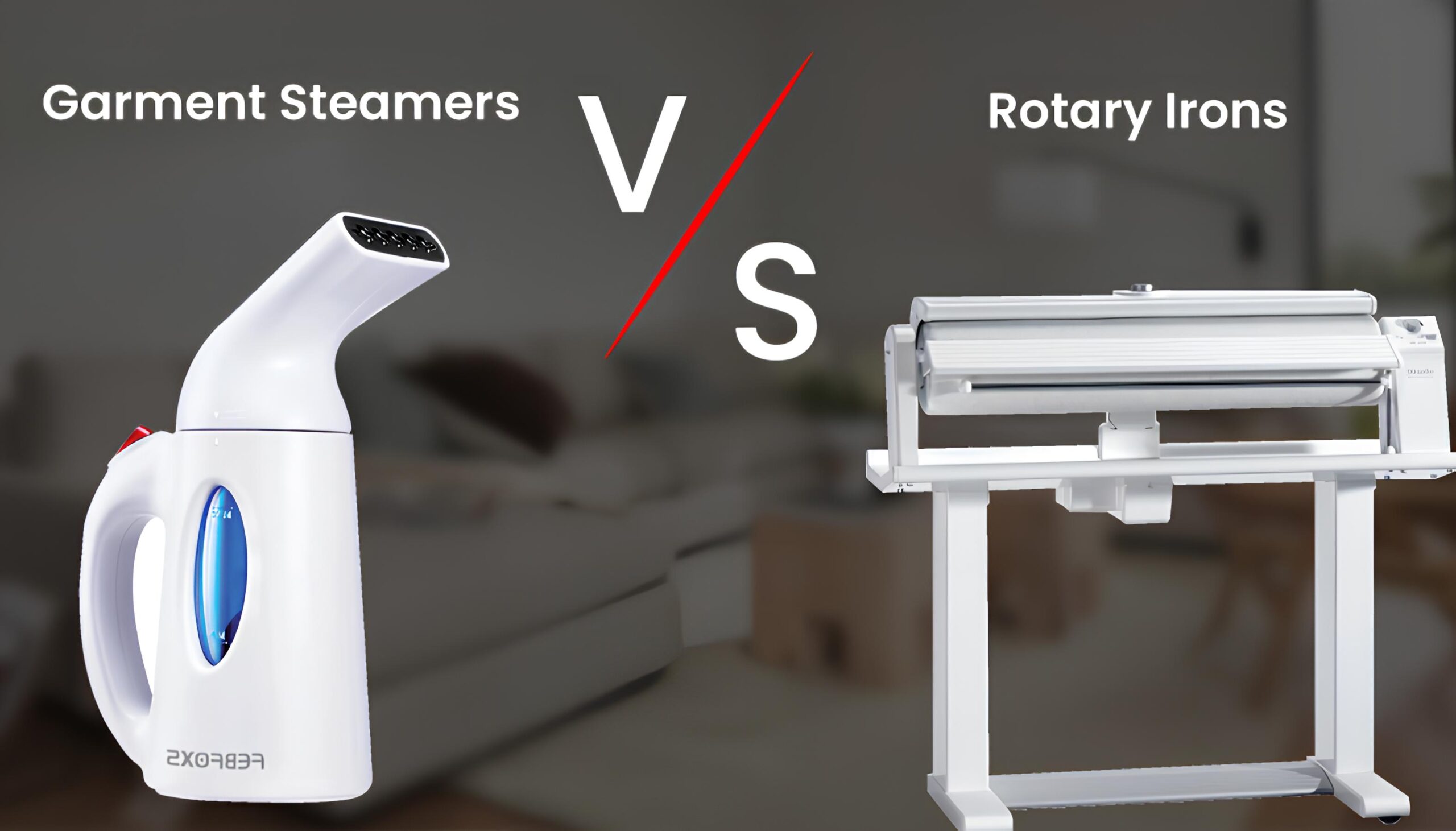
When it comes to caring for garments, two notable options emerge for effectively removing wrinkles: garment steamers and rotary irons. Both options offer distinct benefits and are tailored to meet specific requirements. The decision of which option to chose depends on personal preference or specific requirements. Let us determine the relative merits of garment steamers and rotary irons through a comprehensive comparison. We will discuss aspects such as fabric compatibility, operational convenience, quality of results, and mobility.
Garment Steamers
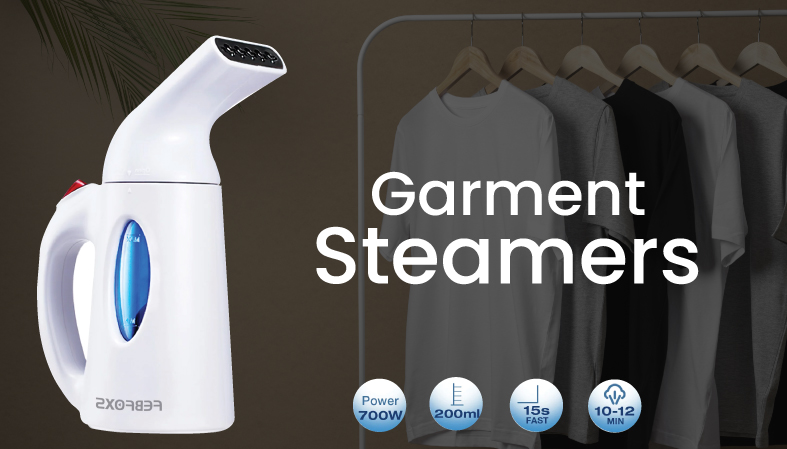
Pros
Gentle on Fabrics: Garment steamers are notable for their delicate treatment of clothing preservation. Steamers utilize hot steam, which is not excessively hot, to relax fibers and eliminate wrinkles without causing any damage from direct contact with a heated iron plate.
Versatile: Garment steamers have a great degree of versatility, as they may be used on a wide range of fabrics, including delicate silks and robust linens. Their adaptability makes them the clear choice for households with wardrobes consisting of items produced from various materials, as no alterations or specific settings are required.
Easy to Use: Operating a garment steamer requires minimal exertion or specialized knowledge. The procedure is simple: fill the water tank, activate its electric motor, and patiently wait for it to generate steam. The garment steamers have a user-friendly design that allows individuals with varying levels of ironing proficiency to operate them.
Time-Efficient: Garment steamers are highly effective, allowing users to swiftly and effortlessly eliminate creases from clothing items. When compared to traditional ironing methods, steaming is more efficient because it does not require exact placement or steady movement over the fabric, resulting in a shorter time needed for the process.
Portability: Garment steamers inherently possess a small size and low weight. Due to their high maneuverability, these items are equally effective for use at home or while traveling, providing a practical solution for storing garments without wrinkles.
Cons
Less Precision: Garment steamers are quite effective in eliminating wrinkles, however they may lack the precision of conventional irons. Using a steamer for clothing that require meticulous finishing, such as those with crisp folds or intricate patterns, might be more challenging.
Water Tank Refills: The water tank capacity of the garment steamer is limited. It needs to be refilled repeatedly throughout long ironing sessions. For some individuals, this disruption in the workflow is a disadvantage.
Not Ideal for Thick Fabrics: Garment steamers are versatile, but they must be capable of handling thicker textiles or garments with multiple layers. Nevertheless, the steam may lack sufficient force to deeply penetrate dense objects; alternative techniques would be necessary for such materials.
Rotary Irons
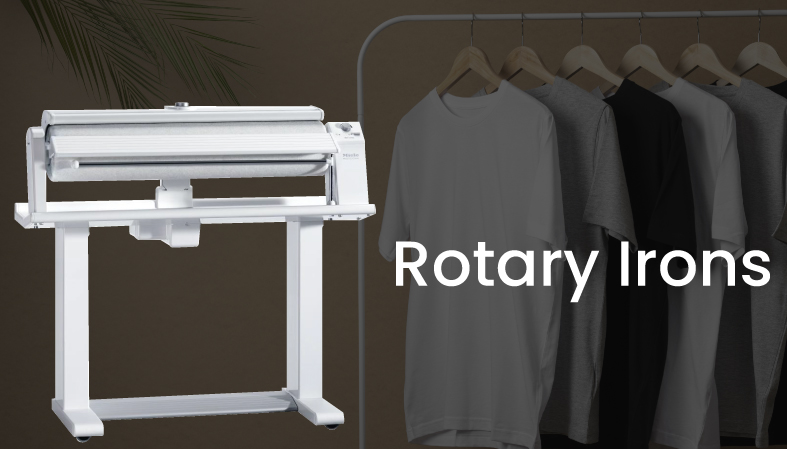
Pros
Crisp Finishing: Rotary irons are renowned for their ability to impart a crisp and polished appearance to textiles. Due to the rotary iron’s design incorporating a sizable roller and a heated plate, garments can pass through effortlessly. The garments are meticulously folded along crisp lines to achieve a flawless and polished appearance, ideal for a professional setting.
Efficient on Heavy Fabrics: The rotary iron excels in its ability to handle thick textiles and several layers, unlike the garment steamer. The consistent pressure used by the roller ensures that even thick fabrics, such as denim or wool, are effectively flattened and wrinkles are eliminated.
Wide Range: Rotary irons offer a wide range of temperature and pressure options, allowing users to customize the settings to match the specific fabrics being ironed. Due to their adaptability, they may be worn with several types of apparel, including delicate silk blouses and durable denim jeans.
Speed and Productivity: Rotary irons are highly efficient and productive due of their exceptional speed. A continuous feed mechanism enables users to effortlessly and rapidly transfer garments through the machine, resulting in speedier ironing compared to traditional manual irons or electric hot clothing steamers.
Long-Term Durability: Rotary irons, due to their heavy-duty design, exhibit greater durability compared to standard steam irons. Consequently, it is a superb option for people who anticipate engaging in regular and extended ironing sessions. The device’s ability to handle continuous applications is what makes its design noteworthy.
Cons
Bulkier: Rotary irons inherently possess larger dimensions and occupy a greater amount of space compared to compact garment steamers. Therefore, individuals who have limited room or a preference for a compact design must carefully consider storage and portability as important factors.
Not for Delicate Fabrics: While rotary irons offer versatility, there are potentially superior options available for the utmost delicate fabric treatment. Even at modest settings, the roller’s pressure may exceed the tolerance of certain materials, thus causing damage.
Learning Curve: Users who are not familiar with the instrument may require some time to become proficient in operating a rotary iron. For optimal results, it requires practice and care to ensure that garments go smoothly through the machine.
Higher Cost: The investment required for a rotary iron is greater than that for garment steamers. From this standpoint, the extended longevity of the product justifies its price for individuals who use it frequently. Nevertheless, individuals with limited financial resources may consider the initial cost of budget retainers to be a barrier.
Comparative Analysis
Fabric Suitability: When it comes to fabric compatibility, whether you are using a garment steamer or a rotary iron, it ultimately depends on the adaptability of your wardrobe. Garment steamers have a high degree of versatility and gentleness. Therefore, they are suitable for a wide range of fabrics. However, when dealing with robust textiles and clothing that require a crisp and polished appearance, it is advisable to go for the rotary iron.
Ease of Use: When considering user-friendliness, a garment steamer is the optimal choice. Due to their uncomplicated configuration and intuitive interface, they can be easily used by anyone with varying degrees of expertise. However, rotary irons may require a period of adjustment for users to become accustomed to manually feeding the fabric and adjusting the temperature settings.
Finish Quality: Rotary irons outperform garment steamers when it comes to achieving a smooth and polished appearance. The consistent application of pressure from the rotary irons, along with precise temperature control, allows for the creation of crisp folds and a polished appearance that is challenging to attain only with a steamer.
Portability and Storage: In terms of portability, the compact size and lightweight construction of a garment steamer provide it a clear advantage. They are ideal for individuals seeking a portable or space-efficient alternative. However, rotary irons are significantly larger than standard flat irons and may present storage challenges, making them a more suitable option for individuals who are comfortable with having additional space.
Conclusion
Ultimately, the victor in the clash between garment steamers and rotary irons is chosen by individual inclination, way of life, and ironing requirements. Garment steamers are highly adaptable and easy to carry, performing exceptionally well in removing wrinkles from different types of materials on a daily basis. Rotary irons are ideal for consumers seeking a professional and durable gadget that can provide a high-quality finish, particularly on thick materials.