


The entire industry and businesses dealing with the laundromat need to undergo a thorough consideration between both the choices of commercial washers- namely, the front load and the top load. Each of its kinds comes with its sort of pros; however, it is an indispensable consideration to understand your business requirements.
In our extensive guide, we are going to make a distinctive comparison of both kinds, looking into the key attributes and functionalities that each one has in their offerings.
Front Load Commercial Washers: Overview and Advantages
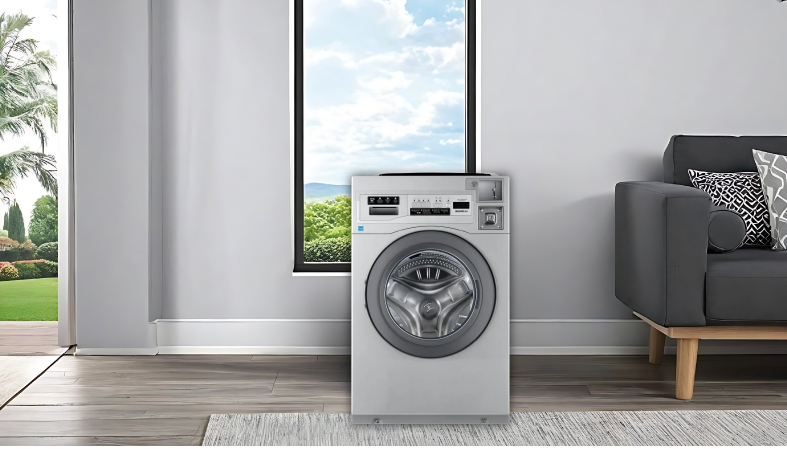

The key and the most integral part of the front load washers is the unique built and sound performances that render them attain huge fame across the laundromat industry. It comes with the feature of a single load within a drum of horizontal shape. The other generic perk of these front-load washes is their ability to manage top loads compared to the other alternatives.
Efficiencies of Potential and Water Retention
The front-loading variety is widely known to outclass top-load washers in terms of water and energy efficiency. This horizontal drum layout enables the machine to consume less water and detergent while still yielding a thorough cleaning. Also, front-load washers are often equipped with higher spin speeds that effectively extract more water out of the clothing during the final cycle, so they take less time to dry and don’t use as much energy.
Gentle on Fabrics
Front-loaders can be gentle in action, which makes them suitable for delicate fabrics. The rotating tumble action of the drum also eliminates damage to clothes so that linen and uniforms can last longer. This is especially important for businesses that must be able to control textiles over extended periods.
Higher Spin Speeds
Front load washers also have the benefit of improved water extraction from clothing because to their faster spin speeds. This not only reduces the drying time but also improves washing efficiency all around. Increased spin speeds also aid in preventing moisture retention, which can result in the growth of mildew and mold.
Space-Saving Design
A further significant benefit of front-load commercial washers is their space-saving design. Because they are stackable, they are an excellent choice for businesses with small laundry facilities.
Top Load Commercial Washers: Overview and Advantages


Although top-load commercial washers are uncommon in the corporate sector, they do provide benefits that are tailored to certain needs and preferences.
User-Friendly
The main advantage of top loaders is that they are easy to operate. In addition, loading and unloading laundry is more comfortable than with a front load machine since there’s no need to bend down into the drum. This is all the more useful for operators who are in less-than-perfect condition or prefer top-loading designs.
Faster Wash Cycles
The short wash cycle of top loaders is another factor. With the agitator, these machines can wash clothes more forcefully and with some gentleness. Top-load washers usually work better for high-volume operations that require short turnaround times.
Durability and Reliability
Top-load commercial washers are noted for their sturdy construction and durability. Another factor behind the top load washer’s greater reliability is that these machines do not need a front door seal, which is usually one of the first parts to break on some other washers. Such a degree of durability makes top-load washers especially ideal for companies with high-volume laundry needs.
Economic Option
In terms of initial cost, top-load commercial washers are generally cheaper than front-loads. This is often an important factor for business people strapped for cash when making decisions. On the other hand, top-load washers have a one-time cost to purchase versus long-term savings of water and energy costs with front-load washing machines.
Comparative Analysis: Efficiency and Performance
In comparing the performance of front-load washers and top-load commercial washers, it is necessary to look at certain ratios related to operations costs or laundry quality.
Water and Energy Efficiency: Due to their water and energy efficiency, front-load washers also make for a sound long-term investment. With the horizontal drum design and higher spin speeds, the consumption of resources is naturally less.
Fabric Care: The tumbler-like movement of front load washers and their low frictional force makes them less abrasive for fabrics. Due to this, they are particularly suitable for enterprises concerned about preserving the quality and life expectancy of their fabrics.
Wash Cycle Speed: Because top-load washers produce faster cycles, they are better suited to high-volume businesses that must turn over their laundry quickly. Nonetheless, front-load washers make up for the longer cycle with shorter drying times, which helps increase overall efficiency.
Ergonomics and User Experience
Commercial washer ergonomics and user experience are important factors to take into account since they affect the productivity and satisfaction of laundry facility operators.
Front Load Washers: If the front load design causes operators to stoop down and pick up laundry for loading or fetch it back in, this might be a source of concern. Yet, this space-saving stacking design lends flexibility to the laundry room layout.
Top Load Washers: This eliminates the need to bend down and provides more ergonomic loading and unloading. The top load design compares favorably with others as well. For operators who hope to simplify their daily operations, this user-friendly feature is a boon.
Conclusion
When selecting between front-load and top-load commercial washers, businesses need to analyze the benefits and drawbacks of each kind carefully. The biggest attributes of front load washers are their high water and electricity efficiency, the gentle care they give to your clothes, faster spin speed as well as space-saving design. But on the other hand, top load washers are extremely user-friendly in operation, fast and efficient at washing clothes, durable for a long time to come and economically priced.