


Introduction
Induction cooktops are a revolutionary innovation in the ever-evolving realm of kitchen appliances, revolutionizing cooking methods. An induction cooktop, commonly referred to as an induction stove, is a stylish and economical appliance that is recognized for its precise cooking capabilities and energy-saving features in contemporary kitchens. This article explores the functionality of induction cooktops, their advantages, and their increasing importance in modern kitchens.

Understanding Induction Cooking
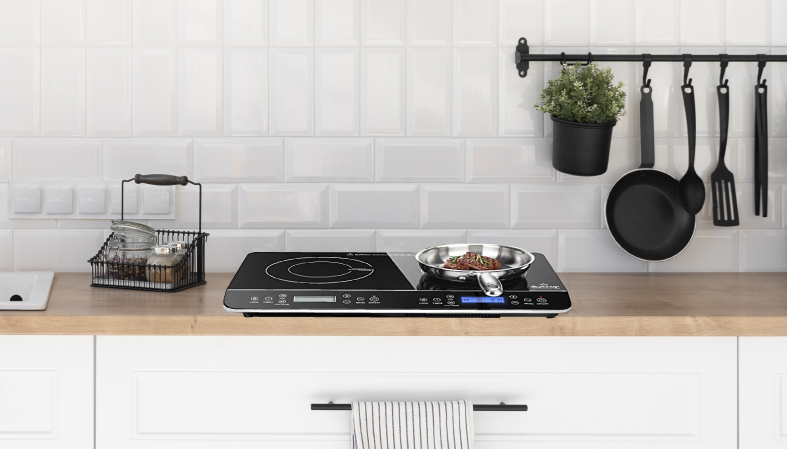
Electromagnetic induction is the core principle behind the operation of an induction cooktop. Induction cooktops utilize a high-frequency electromagnetic field instead of electric coils or gas flames for heat generation. An electric current is induced in an induction-compatible pan’s metal by a copper coil under the ceramic glass surface when they come into contact. The cookware heats up quickly while the burner surface stays cool.
Induction cooktops are not only efficient in rapidly and precisely heating cookware but also provide various other benefits. One major advantage is their safety features. Because the cooktop surface remains cool, the likelihood of burns or mishaps resulting from direct contact with the surface is reduced. Induction cooking is a safer choice, particularly for households with children. Induction cooktops are energy-efficient because they only produce heat when a pan is placed on the surface, which reduces energy usage compared to standard cooktops that continuously release heat. Induction cooktops provide accurate temperature control, making them perfect for delicate cooking operations like steaming or melting chocolate that demand exact heat regulation.
The Benefits of Induction Cooking
- Energy Efficiency: Induction cooking is notable for its outstanding energy economy. It heats the cookware directly, reducing heat loss and maximizing energy efficiency in cooking. This efficiency results in shorter cooking durations and decreased energy expenses, rendering it a cost-efficient and environmentally responsible cooking choice.
- Precise Temperature Control: Induction cooktops offer accurate temperature control, enabling instant adjustments during cooking. This precision allows both professional chefs and home cooks to cook delicate sauces and other temperature-sensitive meals confidently.
- Safety: Induction cooktops prioritize safety above all other features. The cooktop surface stays cooler than standard gas or electric stoves since the heat is produced directly in the cookware, lowering the danger of burns. Moreover, numerous induction cooktops are equipped with safety features such as automatic shut-off and child lock functions.
- Easy to Clean: Induction cooktops have a smooth and flat surface that is simple to clean. Spills and splatters do not adhere to the cooktop because just the pan heats up, simplifying the cleaning process.
- Aesthetic and Space-Saving Design: Induction cooktops are recognized for their elegant and contemporary design. They may effortlessly blend into any kitchen style, whether traditional or modern. Their slender design also creates more space under the counter, providing more storage options.

Considerations When Choosing an Induction Cooktop
- Cookware Compatibility: Induction cooktops necessitate the use of magnetic cookware, usually composed of stainless steel or cast iron. Cookware needs a flat bottom to make sure it makes full contact with the burner surface. You may need to invest in new cookware if your current set is not compatible with induction cooking.
- Cost: Induction cooktops may have a higher initial cost compared to conventional gas or electric stoves. Yet, the enduring energy efficiency and resilience frequently offset the original cost.
- Learning Curve: Individuals familiar with gas or electric stoves may experience a slight adjustment period while transitioning to induction cooking. Mastering the quick heating and precise control may require some experience.
Induction Cooktops in Smart Kitchens
Induction cooktops increasingly incorporate advanced features like as WiFi connectivity, touch controls, and programmable settings due to the emergence of smart home technologies. The features enable remote monitoring and control, enhancing ease and efficiency during cooking.
Environmental Impact
Induction cooktops have a beneficial impact on environmental sustainability. By utilizing electricity effectively and minimizing cooking durations, they contribute to decreasing total energy usage. Induction cooking in houses powered by renewable energy promotes sustainability and eco-friendliness in the kitchen.
Induction cooktops not only save energy but also contribute to better air quality, offering environmental benefits. Induction cooktops use electromagnetic induction to heat the cookware directly, eliminating the need for combustion, unlike gas or electric burners. This indicates that they generate fewer indoor pollutants like carbon monoxide and particulate matter, which helps improve indoor air quality. Induction cooktops help reduce environmental impact by lowering emissions and decreasing dependence on fossil fuels compared to traditional cooking methods. The growing adoption of these environmentally friendly appliances has a significant positive impact on the environment.
Conclusion
Induction cooktops embody the future of safe cooking by integrating efficiency, safety, and precision into a stylish, contemporary appliance. They are a perfect option for individuals seeking to enhance their kitchen with state-of-the-art technology. An induction cooktop provides a high-quality cooking experience suitable for both professional chefs and home cooking enthusiasts, meeting the requirements of a modern kitchen.
Induction cooktops are a wise choice for modern households due to its eco-friendly and efficient technology, providing a safer, quicker, and more pleasant cooking experience.