

It is essential for anyone equipping a kitchen with the appropriate appliances to have a clear understanding of the differences between ranges, stoves, and ovens. Although these names are sometimes used interchangeably, they actually refer to separate entities that have distinct purposes within the culinary domain. This essay aims to clarify these differences, helping you choose the suitable appliance for your kitchen needs.
Ranges, stoves, and ovens are essential components of a well-equipped kitchen, with each serving distinct functions. A range is a kitchen device that combines a cooktop and an oven, providing a flexible cooking option. In contrast, a stove often refers to the cooking surface that is equipped with burners or heating elements, and it may or may not include an oven. An oven is a specialized equipment designed for the purpose of baking, roasting, and broiling.
When selecting an appliance for your kitchen, it is crucial to evaluate your culinary tastes and spatial limitations. Ranges offer convenience for individuals looking for a single, comprehensive solution, while separate stoves and ovens provide more freedom in terms of placement and customisation. Gaining a thorough awareness of these differences enables you to make an educated choice that aligns with your culinary needs and the design of your kitchen.
1. What is a Range?
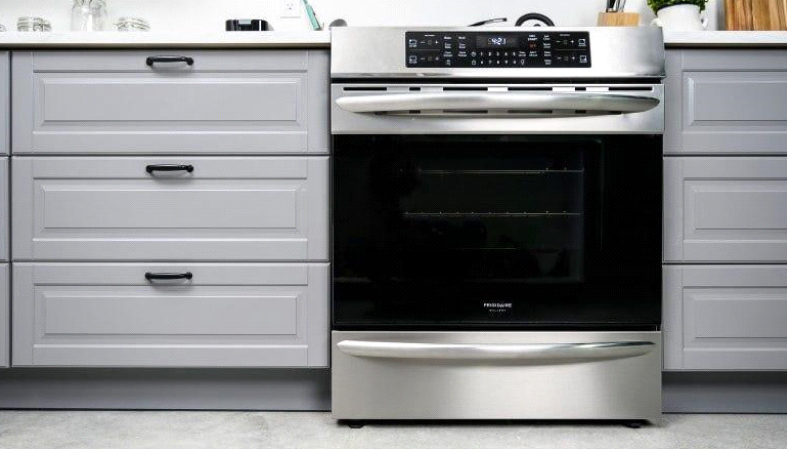
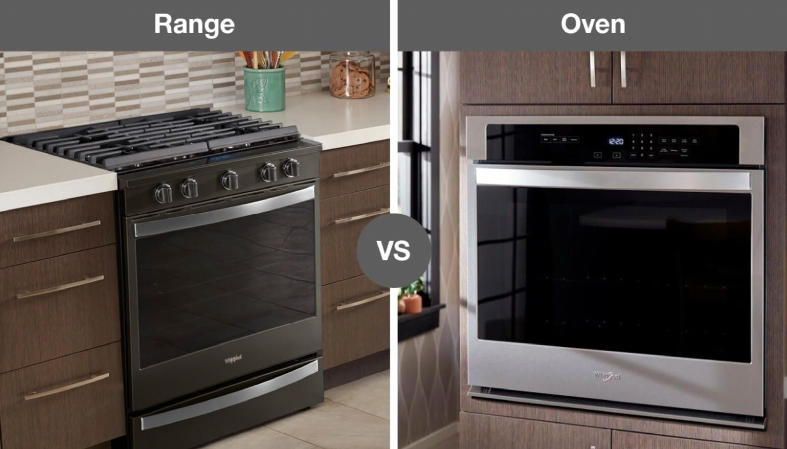
A range, also referred to as a stove in most households, is a comprehensive cooking device that combines a stovetop (or cooktop) and an oven. This culinary tool is highly adaptable and may be used for a wide range of cooking techniques, including boiling, frying, baking, and roasting. Ranges can be powered by electricity, gas, or a combination of both, which is commonly known as dual fuel ranges. These appliances come in numerous designs, such as standalone and slide-in variants, providing versatility to accommodate diverse kitchen configurations.
2. What is a Stove?
The term “stove” previously referred to heating apparatus and was not exclusively used for cooking. However, in modern usage, the term “stove” often refers to the same thing as a range, which is a kitchen device that combines a cooktop and an oven. The cooktop, often known as a stovetop, is the flat surface that includes burners used for boiling, frying, and simmering. In contemporary kitchens, the term “stove” mostly refers to a flexible cooking appliance, highlighting its role in cooking.
3. What is an Oven?
Historically, the term “stove” referred to heating appliances and was not exclusively used for cooking. However, in modern usage, the term “stove” often refers to the same thing as a range, which is a kitchen device that combines a cooktop and an oven. The cooktop, often known as a stovetop, is the flat surface that contains burners used for boiling, frying, and simmering. In contemporary kitchens, the term “stove” primarily refers to a flexible cooking appliance, highlighting its importance in the cooking process.
4. Range Oven vs. Wall Oven
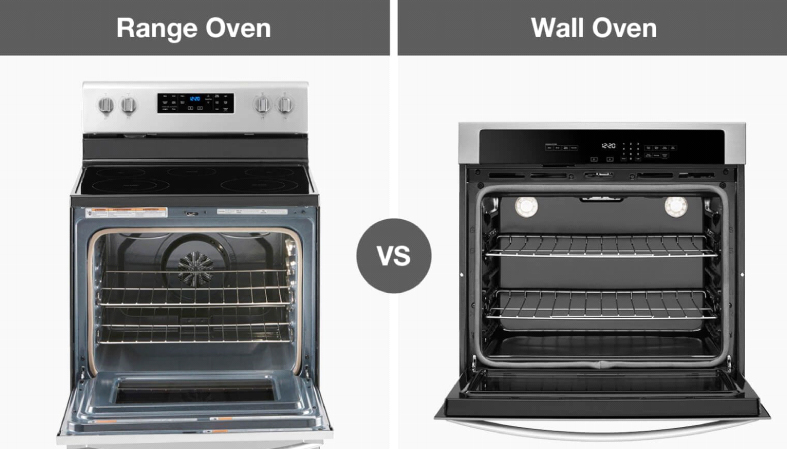
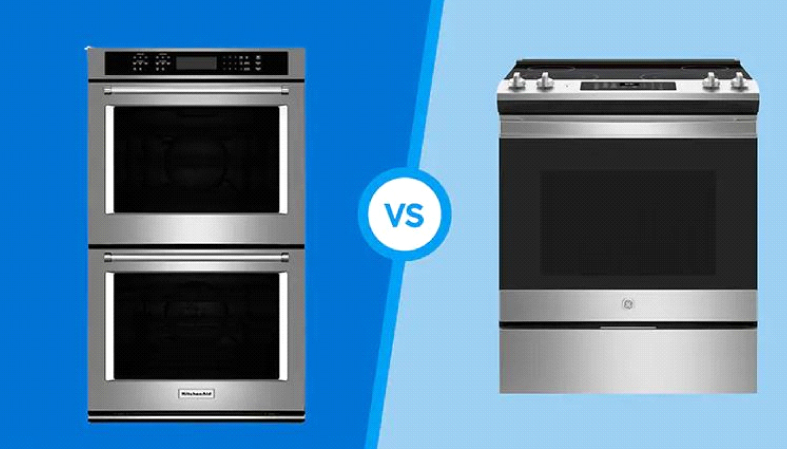
A “range oven” is commonly used to describe the oven that is built into a range appliance. On the other hand, a wall oven is a separate appliance that is built directly into the kitchen wall, providing more versatility in kitchen layout and efficiency. The positioning at an optimal elevation improves the accessibility and user-friendliness. Wall ovens are well-suited for kitchens that have plenty of space, as they allow for the independent installation of a cooktop.
Furthermore, choosing to have a distinct wall oven and cooktop setup might be beneficial for folks desiring a larger and well-arranged cooking space. This configuration maximizes the available surface area on the countertop and enhances the overall visual appeal in the kitchen. Wall ovens are highly versatile, making them a popular choice for individuals who want to create a useful and elegant cooking space.
5. Practical Considerations
When considering whether to choose a range, stove, or oven, it is crucial to consider your cooking preferences, the dimensions of your kitchen, and its arrangement. A range offers ease and centralized cooking, making it ideal for smaller kitchens or persons who prefer an all-in-one solution. However, wall ovens, despite requiring more room, offer increased capacity and ergonomic benefits. Hence, when making your decision, take into account elements such as your cooking tastes, available space, and required functionality to ensure that you get the appliance that most effectively meets your demands and enhances your culinary experience.
6. Installation and Energy Efficiency
Installing ranges is typically more convenient than installing individual ovens and cooktops. Contemporary ovens and ranges are equipped with energy-efficient technologies like self-cleaning and convection options, which not only improve energy efficiency but also boost cooking performance.
When deciding between a range, stove, or oven, it is crucial to take into account your cooking tastes and the amount of kitchen space you have. Ranges provide a practical and efficient solution by integrating a cooktop and an oven into a single appliance. This integrated design is especially advantageous for smaller kitchens where maximizing space is crucial. On the other hand, having separate ovens and cooktops offers more versatility in terms of where they may be placed and allows for cooking many foods at the same time with customizable temperatures. The choice between a range and separate components ultimately depends on your culinary technique, kitchen arrangement, and personal preferences.
Conclusion
Having a clear understanding of the differences between ranges, stoves, and ovens is crucial for making well-informed choices when it comes to kitchen appliances. The choice between a traditional range or separate oven and cooktop layouts is determined by your individual cooking preferences, available kitchen space, and desired design aesthetic. With this information, you may confidently choose the equipment that most effectively compliments your culinary skills and kitchen layout requirements.
Furthermore, it is crucial to examine the technological progress in kitchen appliances. Contemporary ranges, stoves, and ovens frequently showcase cutting-edge characteristics such as the integration of smart technology, the ability to cook with convection, and precise temperature control settings. These technological improvements can improve your cooking experience by providing greater convenience, efficiency, and control over your culinary pursuits. Staying updated on the newest advancements in kitchen appliance technology guarantees that the appliance you choose not only meets your current needs but also keeps up with the changing trends in culinary innovation. By keeping knowledgeable, you can make a comprehensive decision that addresses both your immediate needs and future potential in the field of kitchen appliances.