

A well-designed range hood is crucial in establishing a pleasant and productive culinary environment, as the kitchen serves as the central hub of any residence. Range hoods are essential for ensuring a sanitary and healthful atmosphere by eliminating smoke, smells, and airborne contaminants produced when cooking.
Our comprehensive guide will examine the many categories of range hoods and analyze the aspects that impact their airflow capacity. In addition, we will offer essential factors to consider when it comes to comprehending blower and exhaust choices, as well as determining the appropriate size. Furthermore, we will emphasize characteristics that will improve your whole gastronomic experience.
Understanding Range Hood Types
Wall-Mounted Range Hoods


Wall-mounted range hoods are commonly used for kitchens where the stove is placed adjacent to a wall. These hoods are offered in a range of sizes and shapes, providing versatility to suit various kitchen layouts.
Under-Cabinet Range Hoods
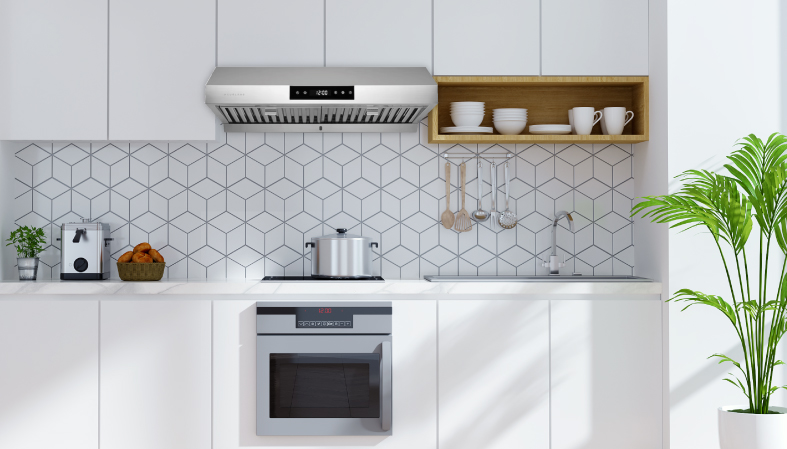

Under-cabinet range hoods are mounted underneath kitchen cabinets, making them well-suited for kitchens that have limited space. These hoods optimize space utilization by efficiently eliminating smoke and aromas, so improving the aesthetic appeal of the kitchen.
Island Range Hoods (Chimney Hoods)


Chimney-style range hoods are well-suited for kitchens that have stoves located on islands. These hoods are suspended from the ceiling and offer efficient kitchen ventilation specifically designed for island layouts.
Insert Range Hoods


Insert range hoods, alternatively referred to as custom or built-in hoods, are flawlessly incorporated into kitchen cabinetry. These ventilation systems offer efficient airflow while also having a stylish design, making them perfect for kitchens that prioritize aesthetics.
Down-Draft Range Hoods

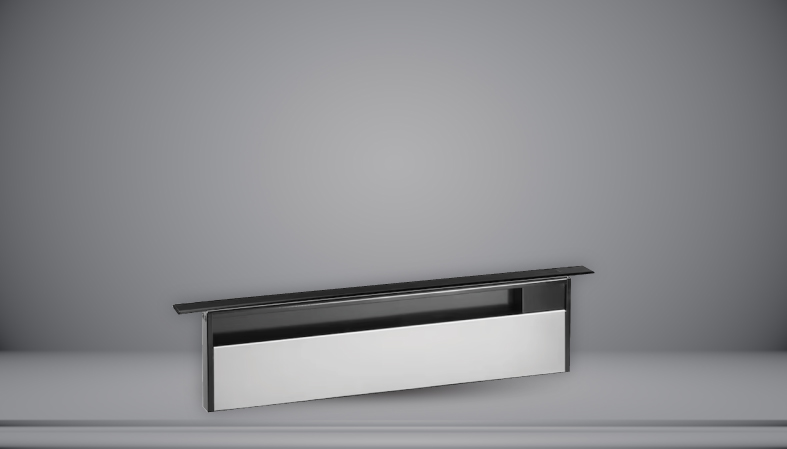
Down-draft range hoods are exclusively intended for installation on kitchen islands. They frequently withdraw when not being utilized, creating a simplistic appearance. These hoods are gaining popularity due to their capacity to trap and release aromas and smoke downwards, guaranteeing efficient ventilation when cooking.
Choosing the Right Airflow Capacity (CFM)
The efficiency of the range hood is determined by the cubic feet per minute (CFM) measurement. Choosing the correct CFM capabilities will guarantee that the ventilation mode is acceptable and effective. When beginning to identify the appropriate CFM, it is important to examine the following crucial factors:
Factors Influencing CFM Requirements
Stove Type (Electric or Gas): Gas stoves often produce more heat, necessitating higher CFM ratings for efficient ventilation.
CFM requirements for successful capture and removal of cooking wastes are higher for larger cooktops or ranges.
Cooking Frequency: Regularly cooking at high temperatures or using oils that produce more smoke requires a greater CFM (cubic feet per minute).
Kitchen Size: The dimensions of the kitchen impact the necessary airflow to sustain a more hygienic cooking environment.
Key Considerations for Range Hood Size
To optimize efficiency, it is important to ensure that the range hood is large enough to cover the entire cooking surface. It is often recommended to match the width of the range hood with the width of your cooktop or stove.
Exhaust Types: Ducted vs. Ductless vs. Convertible
Ducted hoods are equipped with a ducting system that efficiently expels air, thereby eliminating contaminants. Usually, they are situated in close proximity to the wall at the outermost end.
Ductless hoods employ filters to capture contaminants and then recirculate the purified air back into the kitchen. They can be positioned in various ways, however they are often not as efficient as ducted hoods.
Convertible hoods are versatile, functioning as both ducted and ductless types, allowing for different kitchen configurations.
Blower Types: Exterior, Interior, In-Line
The outside unit, situated outside the property, offers efficient ventilation with minimum noise in comparison to indoor blowers. They are appropriate for kitchens that require a greater CFM (cubic feet per minute) rating.
The interior unit of the range hood features compactly designed internal blowers. Although they are simple to install, they have a tendency to produce more noise compared to outdoor blowers.
In-Line Unit: These blowers are positioned in close proximity to the range hood, providing a harmonious combination of strength and noise mitigation. They are well-suited for kitchens that have limited space.
Range Hood Features to Consider
Ease of Installation
When choosing a range hood, prioritize models that are straightforward to install, particularly if you want to do the installation yourself. Seek out units that feature intuitive designs and explicit installation instructions, since these may be especially beneficial when doing kitchen renovation endeavors.
Wireless Capabilities
Certain contemporary range hoods are equipped with wireless functionality, enabling remote control and monitoring through voice commands or smartphone applications.
Heat-Sensing Technology
These range hoods utilize heat-sensing technology to automatically regulate the fan speed according to the cooking temperatures, guaranteeing the most efficient ventilation performance for your kitchen appliance.
Night-Light/Task Lighting
The hoods are fitted with built-in illumination, which improves visibility in your cooking area and contributes to the visual attractiveness of your kitchen. Search for hoods that offer adjustable brightness settings to allow for personalized illumination.
Digital Controls
The computerized controls enable accurate fine-tuning of lighting and fan velocity. Equipped with digital displays and touch-sensitive panels, these hoods provide a fashionable and contemporary appearance.
Conclusion
Choosing the suitable range hood entails taking into account crucial elements such as the configuration of your kitchen area, your culinary practices, and the requirement for adequate ventilation. Gaining a comprehensive understanding of these characteristics can improve the effectiveness of your kitchen and establish a sanitary setting in which you may relish cooking with proper air circulation.
Thoroughly exploring your alternatives is crucial when choosing a range hood that perfectly matches your culinary lifestyle and enhances the beauty of your kitchen.